Reviews Outstanding

The Female Eunuch by Germaine Greer (Read February 2015)

Jarhead by Anthony Swofford (Read March 2015)

The Big Short by Michael Lewis (Read February 2015)

The Warmth of Other Suns by Isabel Wilkerson (Read March 2015)

A Geek Guide in Japan by Hector Garcia (Read February 2015)


Currently Reading: Capital in the 21st Century

The Kingdom — Jennifer M. Barry — Book Review

The Kingdom

One-sentence summary:

A YA paranormal romance that is poorly executed, has bland characters, inconsistent pacing but solid writing.

Longer Musings:

The Kingdom is a first-person narrative written from the perspective of Rioghan, an immortal man, who begins the novel with a single purpose: to seduce and sleep with as many attractive women as he can find. To accomplish this task he has several tools at his disposal: his god-like looks, complex understanding of the human psyche and an ability to magically charm anybody he wishes.

Luckily for the readers, he quickly stumbles onto Lily who rebuffs his advances with snarky barbs and some eye rolling. She has red hair, an irish background and a beauty that is beautiful. Like an angel. Also, she can sing. Which we discover, conveniently, because they both happen to arrive at the same mystical castle ruins at the precise moment in time they have to be there. A feat they manage to accomplish over and over and over again. That is until Rioghan gives up on requesting fate (or the author) to put up a billboard saying that he’s in love and starts to stalk Lily.

Naturally, Lily — the 19-year-old goddess — has lots of time for Rioghan because she’s rich. Or, at least, her mother is and so she can travel anywhere her heart desires, and still squeeze in a complaint session about the exact same parent’s controlling tendencies. A problem that Rioghan also has, except with his father. A bond, that together, they will use to overcome these issues and embrace their new lives.

The book is 177 pages long, but it felt huge. Almost 1/4 of it is spent on the two main characters talking about the ‘hidden’ history of the world. Nothing happens. They don’t discuss this in the middle of a fight scene (akin to Mr. and Mrs. Smith), or have a verbal debate (a la The Incredibles), they simply sit in a room while Rioghan educates Lily on how things are. If you like your mansplaining long and condescending then The Kingdom is right up your alley. It has entire sections where the male contemplates about how he’ll need to re-educate the love of his life once she’s out of her mother’s control. How he’ll ‘fix her’ like a Coldplay song might.

That’s not say The Kingdom is entirely devoid of merit. The writing is solid and the historical setting’s interesting. However, they’re wrapped around a protagonist who has major issues. Firstly, he falls into the immortal-yet-boring camp for me. This is a man, a good-looking god, who has nothing interesting to say. Knows less about the world than a high-school student and falls in love with a young woman who is as uninteresting as him. He compares (or, more precisely, the author compares) the effect that the Belfast bombings’ had on him to his non-girlfriend disappearing from his sight. That is a real thing in this novel.

This happens about one third of the way through the novel, the exact moment in time that the author seems to realise that they have created someone devoid of personality and need to spice things up. Make him less, less. So as if in response to this realisation, Jennifer M. Barry grabs a horrific terrorism attack that shook an entire city, took hundreds of lives, and plops it in there. And then promptly forgets about it. An event so important that even the narrator (originally) tells us that it scarred him so deeply he started to care about humanity. Unless, you count the start of the novel, where he didn’t really too much about anyone except hot babes..

So, yes, the writing is fine and the characters act out their arcs in the expected way with no major changes to the plot line that Twilight made famous. One thing I will say is that the word beautiful appeared on awful lot, 54 times according to my search for the term. I’m not sure if that’s on par for this type of work, but it was enough to irk me to investigate further.

Conclusion:

The Kingdom is a YA paranormal romance that is less story and more reader fantasy. It features rich and attractive young adults with 1st world problems who dislike their parents. The novel has large info-dump sections told around coffee tables, a sexist male protagonist / stalker and a rushed-together action sequence at the end. There are some interesting world-building ideas proposed in the novel, but they’re not used effectively or to build the main story. My recommendation is to skip it and re-read Twilight instead.

Books Are Indie


1001 First Lines — Scarlett Archer — Book Review

First Lines

One-sentence summary:

A collection of first lines from famous and popular novels in a variety of genres.

Longer Musings:

1001 First Lines is a hit-and-miss amalgamation of first lines that could’ve done with a significant amount of trimming (or more editorial choice). The idea behind the text, according to Scarlett Archer, was for her to provide an easily accessible reference of sure-fire ways to grab a reader’s attention. And it’s a great idea, definitely one that all writers need. The problem with this book is that it seems the need to hit 1001 lines overtook quality control.

I went through and highlighted all the lines that grabbed me. I’d say there were less than 80 that were truly memorable. In some cases it was because the gripping part of the hook came later in the paragraph. For example, 1001 First Lines quotes Old Man’s War by John Scalzi:

I did two things on my seventy-fifth birthday.

Not so grabbing. However, the first paragraph reads:

I did two things on my seventy-fifth birthday. I visited my wife’s grave. Then I joined the army.

Powerful, dynamic and completely sets the tone for the main character and novel.

Then there are the bewildering choices. For example, All the President’s Men opening line is:

June 17, 1972.

For a non-fiction work that’s a decent beginning sentence to ensure context, but to decide to include it in a compilation of first lines? That something else entirely.

In other instances, excellent works get the short-end of the literary stick, The Name of the Wind commences with:

It was night again.

One of the great, in my opinion, poetic prologues is reduced to a mere four words. Is it a great novel? Sure. Absolutely. Is it one the best opening lines crafted to yank readers out of their revere? No.

While I was reading 1001 First Lines, it seemed like the idea had been stretched to breaking point. To get to that magical number, the author had put in any and every book that had ever been culturally relevant without asking the most important question, “Is this a great opening line?”

Which is sad, because it’s a wonderful idea.

Conclusion

1001 First Lines should really be titled 1001 First Lines from Popular Novels that May or May not be Any Good. I’m glad Scarlett Archer put this work together and I definitely saw some interesting uses of English reading it, but it could’ve been improved a lot.

At $0.99, you get what you pay for. At the paperback price of $15.41, it’s probably worth a pass.

Books Are Indie

Zoo City — Lauren Beuke — Review

Zoo CityOne-sentence summary:

Zoo City is  a captivating first-person narrative about the life and times of Zinzi after she’s been released from jail and tries to eke out a living in South Africa with her magical sloth.

Longer Musings:

The world has changed in Lauren Beuke’s Zoo City; a powerful force has come into existence that punishes the wicked. If you rape, murder or torture other humans then the undertow will come for you; a dark, mysterious substance that gives a choice: agree to be chained to a pre-selected animal or disappear into the depths with it. The characters who choose life over death call this being animalled and it ensures the whole world can see their sins. It stops them from getting good jobs, allows shop keepers to stop them from shopping at certain stores and deters the decent people of the city from interacting with them.

The (mildly) good news is that these animals come with a unique magical power. Perhaps you can turn into a shadow, or see the future. Or, like Zinzi the heroine, find lost items. It doesn’t make up for her inability to procure an apartment in the safer parts of the town. Or to re-commence her life in a professional capacity once she’s gotten out of jail, but it enables her to make enough to survive. Oh, and if her sloth dies or they get separated, terrible things will happen to her.

Written with about as much punch as a Raymond Chandler novel, Zoo City is my kind of novel. Everyone is horrible or verging on cringeworthy. Whether they are ‘innocent’ pop stars or editors who report nothing but the truth to the populace, they all have a hidden agenda. Or, in some cases, a third-or-fourth one too. Which is good because, just like a Raymond Chandler story, people die at an alarmingly rapid pace. If George R. R. Martin makes you care about his characters before gruesomely decapitating them, Lauren Beuke does not such thing. I understood them, but I didn’t like them. When their remains were found on top of a hill in some disturbed arrangement, I wasn’t overly concerned with the anatomic painting they’d been used to create. They were horrible, and probably going to die sooner or later. Sooner being the better for everyone else.

Even Zinzi is a conflicting case. She’s selfish, a fact that’s reinforced by the number of characters who tell the reader this through the novel, but she’s also trying to do the right thing. It might take her a long time to get there, and she often struggles against her own narrow interests, but eventually she stumbles on a path that will help people other than her. Plus, most of the novel is written from her perspective so she has a lot of time to make her case and show you how sorry she is for the mistakes she made in her former life.

Of course it helps that she’s simply the best of a really, really, really awful bunch. This is the slums reimagined with magic in all its vile detail. There’s hope about the lifestyles forced on the residents of Zoo City, but not much.

Other than the first-person narration, there are some post-modern flourishes such as emails and news articles that are used as info-dump sections to give backstory. They’ve been put together effectively despite the fact that the first one is a bit jarring. How it works into the narrative isn’t introduced until the chapter after it appears so I initially wondered why had been inserted. After that though, they were fine.

The problems I had with Zoo City were with the pacing and the ending. There are three main arcs to the story: Zinzi hunting down a missing pop star, Zinzi paying off her debts to a local crime enforcer, and Zinzi’s relationship with her boyfriend, Benoit. At about 87% through the novel, all of these seem to be coming to a steady conclusion. Not too dramatic, but about right. Then, suddenly, something happens. Something that doesn’t make any sense and all the arcs open up again. It felt as if Lauren Beuke had written a really tight, compelling noir novel and then some editor said, “But what about the sequel?” So a thing is introduced, the important threads are left unresolved and we may eventually get Zinzi Part 2: Zoo Travels! .

Also, there are entire sections that appear as if they had been added for fluff. When you read the thank you notes, there’s some mention of who Ms. Beuke visited and talked to in South Africa for the novel. These parts feel as if they were shoehorned in as tribute or homage to her own life experiences. They didn’t add to the story, they simply extended it until we got to the ultimate climax which plays out part adventure and part deus-ex machina. Still, hey, it’s magic. Can you really argue against that logic?

Conclusion:

There’s a lot to like in Zoo City. Zinzi is as real as the city she lives in and depicts the life of the segregated in all its complexity. It holds no punches and reflects the rawness of the life for the many folk who are not blessed enough to live above the line. The plot is compelling and drives the story forward with a lot of unique characters who saunter through the pages and steal scene after scene. Unfortunately, at points it feels like some filler  has been added to the novel to extend it, and the ending leaves a lot to be desired.

However, for its unique location, great writing and different take on an existing genre, I’d highly recommend snatching this one up so you can start reading it today.

Books Are Indie

Evolution’s Child: Earthman — Charles Lee Lesher — Book Review

Earthman

One-sentence summary:

A dying-earth novel that is more concerned with its universe’s inner-workings than actually telling a story,  Evolution’s Child: Earthman is a mixed-bag that starts off with the breakneck speed of a thriller before morphing into little less than a series of conversation pieces between a growing roster of characters.

Longer Musings:

Evolution’s Child: Earthman starts with a deep-cover analyst, Lazarus, making a speedy escape from his current life on Earth where he lives with a cyborg-surrogate wife and a in conflicted existence. Written in the present tense the scenes unfold as if revealed by the shaky-cam of an expert thriller director. During these moments, and the aid of a helpful narrator, the reader gets to visit a world taken over by fundamentalist groups that hold each other in check by the power of their military might.

Lazarus is heading for The Republic of Luna — a society on the moon that believes in rational thought, science, democracy, and of course, a new strain of capitalism. It’s the perfect world for the emotionally torn Lazarus who has a complicated history of being part spy, part thinker and part expert liar. Conveniently, he also meets Lindsey, a seductive and sexually free woman who happens to be placed next to him so he can embrace his new lifestyle via the power of physical intimacy, and be granted with an audience with the person he needs to see.

Unfortunately, for me, this was the point in the novel where it started to deteriorate. Once the external threat of being captured by his repressive government disappeared, Lazarus had nothing to fear and moved into conversation mode. He talked about Luna’s culture with all those who were willing to speak to him. He made mistakes (because of his primitive mindset) and marvelled at the perfect society Luna was, and how vastly improved it was over his oppressive home world.

That isn’t to say Lazarus is some hillbilly without a charming trait. We learn, by the way of being told by anyone who meets him, that he’s a unique Earthman who’s different than everyone else. This is said to us not just by Lindsey, who makes love to him quicker than a space shuttle can land, but also via almost every other main character. Sure, he may’ve been raised in an oppressive environment, but he also had access to the great literature of the day such as Vonnegut and Homer. Which, naturally, he quotes whenever the moment calls for it.

And nothing happens. Nothing. Page after page after page of world building until the last 8% where an event occurs not because it’s been worked towards, such as in a Tom Clancy novel, but simply because the author decided it was time for a change of pace. So we have another action sequence where Lazarus, despite his obvious limitations in this new environment, gets to show off his heroic side and win the hearts and minds of his new comrades.

By the end of Evolution’s Child: Earthman, the hero has become less complicated human being and more Mary Sue. His warts are smoothed over and the other-side’s faults are highlighted as he steps into the role of glowing champion for the race that needs a little help.

As for the writing, it was solid. It was written in present tense, but with an omnipresent narrator advising us what was happening. There were times when Charles Lee Lesher wrote about future events and what was going to happen which took me out of the story and destroyed any sense of emotional tension in certain scenes. Your mileage, however, may vary. Also, there was a significant amount of head-hopping where the reader would suddenly be told what someone was thinking despite the fact we’d been in another character’s head for 90% of that section. It wasn’t as jarring as the predictions, but they still made me wince. Even more so when it was only to tell me how great Lazarus was once more.

There were two other strange inclusions in the book: hand-drawn pictures of the characters and a timeline about major events. At the start of the novel, there’s a massive info-dump about the history of humanity and what led to the world splitting apart. The section added nothing to the story except to make me flick through a stack of pages so I could get to what I wanted to read: the narrative. And then each chapter started with a picture of a character. I’m not against using pictures in works, however, they have to be at a certain standard. These were not at that standard. They were not the quality an author should be happy with because all they did was detract from the novel. Essentially, these two inclusions made it feel as if Charles Lee Lesher had thrown everything he had into the work so that it was full, instead of choosing what was necessary to propel the tale along.

Overall though, Evolution’s Child: Earthman was competently put together and made for a solid read.

Conclusion

This is one of those novels that I started on a bad foot with because of the info-dump sections and present-tense prediction, but began to enjoy after getting into its rhythm during the chase scenes. Then, just as I commenced liking it, the author stalled the narrative so he could explain how great the main character and the new society he’d created was. By the time the action started again (for no real reason except the text was running out of pages), I’d lost interest and the ending didn’t wrap up any of the main arcs.

As such, I’m on the fence about this work. Halfway through I wanted to read the next book, at the end I didn’t want to read anything in this series again. My recommendation is to read Harmony by Project Itoh or purchase Evolution’s Child: Earthman with cautious optimism.

 Books Are Indie

Winter — S.D. Rasheed — Book Review

The Book Cover for this Work is not Available without a Watermark via Traditional Means .

One-sentence summary: 

Challenging to read because of its sudden tense changes, Winter is a paranormal romance filled with confusing powers, easily seduced young women and a story that leaves a lot to be desired.

Longer Musings

Winter focuses on the lives of four orphans and their matron who live in Ravensdale, an English or Irish town with fields; tiny houses and friendly locals. There’s Chastity who burns with unmitigated passion for her soon-to-be military fighter, Hugh. Then comes Leah, the practical and down-to-earth resident who looks after everyone when the matron, Vivian, is away and, finally, the bookworm, Geneve.

Oh, and there’s also a gang of triplets who have just recently joined the crew under mysterious circumstances.

Despite the book starting with Chastity finding an almost dead blue-haired man in a field and her lover disappearing off to a potentially tragic war zone — S.D Rasheed adds even more problems that her protagonists have to deal with by the way of a plague that has quarantined them to a specific area.

The books poses many questions — how does Vivian have enough money to run entire orphanage for only four girls? Why does a practical down-to-earth woman fall in love with a mysterious man for no reason? Why do the main characters always wait an extra day before doing what they should’ve done a sunrise earlier?

Normally you can forgive a work for not answering these queries, especially one written from a first-person perspective. Except, in Winter, the narrative jumps from character to character depending on the whim of the author. So, by way of narrative shift, S.D. Rasheed strips away the tension from the novel. I wasn’t watching with Chastity as her friend twisted and distorted into something else and had to guess (along with her) what was happening; rather, I already knew what had happened because I’d spent some time in another character’s head for several more info-dumps and teen angst. And the worst part of this narrative choice was that even though there were three women talking in first person throughout the novel, I couldn’t tell the difference between them. I often had to go back and read the explanation of whose head I was in at the start of the chapter to ensure I knew who was talking to me.

Then, as if conceding that too many questions had gone unanswered, S.D Rasheed finishes the book from the warlock’s perspective (still in a similar style to all the others). This allowed her to explain away all the various plot holes that had accumulated up to that point. (Almost, some of them never went away.)

Which leads us to the narrative, and it is one that has no real beginning, middle or end. I understand that this type of meandering, inter-connected series of vignettes became popular with Twilight. And that’s fine, I can defend Twilight because at its core it has a focus: Bella and Edward. Winter, unfortunately, spreads itself too thin. It has too many characters with too many contradicting motivations leading to a conclusion that is less ending and more setup for the next novel. Really, for me, Winter was a prologue that could’ve been incorporated into the narrative of a longer novel.

Tragically, all of this is tied up in writing that struggles to know whether it is in the present or in the past. There’s a significant number of flashbacks or stories told by the character speaking at the time, but the way they’ve been put to paper, they become difficult to follow. Often times I couldn’t tell if the speaker (Chastity, Vivian, Winter or Leah) were discussing something that was happening in front of them or something that had happened previously and they were telling the reader about it in the present.

Overall, I was often confused whose head I was in, where I was and what was happening on the very page I was reading.

 Conclusion

Winter is a run-of-the-mill paranormal novel that has taken on much more than it can handle. The narrative jumped between characters so quickly that none of them were able to leave any lasting impression on me, had too many plot holes that created irritation instead of tension, and was written in a way that made it difficult to tell whether the tale being told (at the time) was set is in the past or present. There are a lot better paranormal novels than this one. I’d suggest Amanda Hocking, Stephanie Meyer or The Paper Magician instead.

Books Are Indie

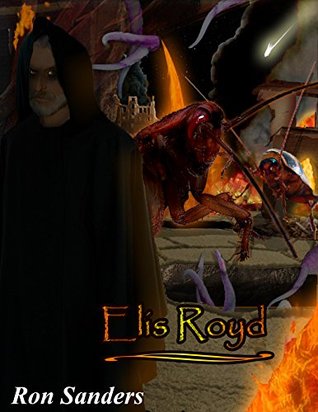
Elis Royd — Ron Sanders — Book Review

Elis Royd


One-sentence summary:

Elis Royd is a one-dimensional romp through colonisation and man’s arrogance with an uninspired story and eye-rolling conclusion.

Longer Musings

I feel there is no better way to start this review than with parts of the author’s own promotional blurb:

At last: science fiction for grown-ups!

…

No vampires here. No superheroes, wizards or werewolves. No talking dragons, no zombies, no flying bespectacled British schoolchildren. Sorry. Elis Royd is solely for thinking adult readers.

So, big promises, huge premise…does it deliver?

Elis Royd serves as the name of the novel and the name of the asteroid it’s based on. It takes us to the last few months (weeks?) of the colonised-rock’s existence and shows us how the empire falls. Part narrative; part faux-history; part science text, the work is designed to challenge our assumptions of intergalactic colonisation and how we would react as we spread out across the stars.

Essentially, there’s two cultures–humans and Royds. Royds are a sort of an advanced insect labourer that has less developed cognitive functions than homo-sapiens. They are trusting (conveniently) and easily manipulated by the devious and scandalous administrators of the Earth compound. There’s also a whole host of other evolved species such as leeches, giant roaches and things that go bump in the night. But don’t worry about them, they only exist to mysteriously appear and kill the characters whose arc has finished.

On the human side, we learn about the three masters of the Earth Administration: The Commander, The Arbiter General and The Elder. They are presented as a trio of old men desperately besotted with dreams of a vast mountain of gold hidden in the Royd camp. They will torture, cheat, lie and steal their way to it. If it exists at all. And of course, despite their immense intellect, they will come unstuck because the are unprepared for any deviation from their plans.

Then there’s Emra, the Queen. She’s the first Royd who shows the mental capacity to fight against the Earth Administration. After a series of tragic events, Emra discovers her emotional strength as well and gathers her forces to charge forward and remake the world how she wishes. Along the way she finds a general (who just appears and has a brilliant strategic mind), another Royd who is also full of cunning despite having done nothing with it, and an uncanny ability to get herself into trouble.

As the story is mostly vignette, it jumps from character to character to give a complete picture of the upcoming war on both sides. In many ways, it’s similar to the historical narratives now written by historians about past battles. Unfortunately, for me, that’s where the positive parts of Elis Royd end.

Firstly, I didn’t care about anyone. I had plenty of time to be made to care, there’s lots of pages, but no one was complex enough for me to worry about. The Elder was motivated by greed. That’s it. Emra only cared about defeating the humans. Finish. The characters didn’t think or reason or strategise. There was no doubt. They simply travelled along a series of pre-set rails until they reached their final destinations.

As for the secondary characters, they were all the same. Arrogant Guard 1 shows up, dies. Then he (always a he) is replaced by Arrogant Guard 2. And so on. In the Royd camp, there was Trusting Civilian X. As such, even the number of named people in the novel didn’t matter. They were cutouts to replace the same type of person who had existed previously.

There’s no doubt the book has big ambitions — showing the fall of a culture in a novel — but the end result is not a highly-developed think piece for ‘adults’. A think piece for me is one that cuts deep and makes you question your basic assumptions about the world. Elis Royd fails that. Firstly, its humans are white, male and American. Ron Sanders seems to realise this is a problem about halfway through and info-dumps Earth’s history on us. This isn’t a complex, nuanced info-dump either. It’s basically, the Earth was filling up and the Americans innovated their way to success because, y’know, they’re Americans.

Also, for some reason that’s never explained, people in the colony are Christians although there are no theological discussions about what that means. Generally, what happens in the novel is that when a character needs to commit a terrible act, they invoke the almighty power of God. Who knows why. God becomes a sort of author-invented motivating force to remove any questions about actions that have had no foreshadowing.

Finally, at the ultimate climax, Ron Sanders tosses in a twist that makes no sense. The more I think about the ending and its logical conclusion, the more I scratch my head. It’s supposed to be profound, but all it did was make me wonder if the author had considered what technology would be available to those in that situation.

Which brings us to the writing… it was ok. Mostly it was fine, although a little dry for my tastes. There were some odd uses of idioms that didn’t make sense when placed in a sci-fi novel. Some dialogue was less cultural specific that it should’ve been and more ripped from today’s vernacular which warped the characters into a sort of time vacuum. Where did they come from? What is their culture? Just simply things that took me out of the story. Otherwise it was fine, but not quite electric with excitement.

Conclusion

I can’t recommend Elis Royd. It paints itself as an adult novel for the intelligentsia of today who are bored of genre-based stories; yet, it trades in one-dimensional characters and strange cultural underpinnings. What it aims to do — analyse the complexities of colonising another life form — it completely fails at. By making 90% of its characters white; male; American and Christian, it takes away the diversity of humanity for no reason and then fails to take advantage of the differences of opinion people have about things. There are long info-dumps that are as interesting as recipe-book instructions and lifeforms which serve as deus-ex machina tools so they can conveniently kill off the unneeded characters.

Overall, I left bored and was counting the pages to the end.

For those looking for thought-provoking, I’d suggest Irradiated by S. Elliot Brandis.

Books Are Indie

The Paper Magician — Charlie N. Holmberg — Book Review

20727654One-sentence summary:

Full of evocative writing and young-adult angst, The Paper Magician doubles as a tale about the joys (and naïveté) of falling in love and what happens after the wedding bells have chimed.

Longer Musings:

Ceony–a talented, hard-working, stand-up-for-herself young woman with a photographic memory–is forced into studying paper magic (Folding) for the rest of her life because there’s a shortage of these specialist magicians. As she makes it clear to everyone around her, often, she worked very hard to choose Smelting (metal enchanting) but has been forced into the less-than-glamourous life of working with the good ole papyrus. This is doubly unfair because she graduated from Tagis Praff (the academy of all supernatural arts) in a single year(!) and that alone should’ve allowed her to choose her specialty. Alas, no, she is condemned to a life of Folding because… No one else graduated that year, I guess.

Fortunately, her teacher is a green-eyed eccentric who enjoys a little insubordination and has kind heart. And an attractive face. His name is Emery Thane and he stimulates the nineteen-year-old apprentice in ways that she never imagined he would.

So begins a clever and interesting novel about the challenges of being a magician’s apprentice, about how to mentor an overly intelligent student… well, until something happens. Let’s just say it involves an ex-wife, the dark arts of flesh magic, and shifting the narrative away from Ceony and focussing more on other people’s backstories.

As much as I enjoyed Ceony’s voice (it’s written in limited third, from her perspective), it was at this moment that the novel and I parted ways (slightly). What had started (to me) as a unique world post-Harry Potter turned into a trope driven narrative constructed by Charlie N. Holmberg. Firstly, there was the tragic backstory competition. As the middle of the novel stretched on, every character was revealed to have an expanding series of traumas hiding underneath their aquiline and slim faces. Not that these were fleshed out, no. They were simply used as factual statements in theological debates. “I can’t go on because this XYZ incident happened and now I feel unparalleled guilt,” Thane might say.

“Yes,” Ceony may snap. “But I continue to exist even though PIU has happened in my life. You go can find the ability to go forward as well.”

So it went.

Then there was the rate at which Ceony’s abilities grew in adversity. Don’t misunderstand me, I’m all about unlocking supernatural powers in the middle of combat when Ichigo fights against his nemesis. The problem is, Bleach‘s world’s rules are not set in the semi-realistic place of The Paper Magician.  Whereas in Harry Potter, J K Rowling lays out the spells or ongoing abilities Harry has from book to book so he can use them in increasingly varied ways to defeat Voldemort, Ceony just gets better. This isn’t three young magicians after a year of study showing pluck and courage against a more difficult foe in The Philosopher’s Stone, this is one girl with barely any training fighting against…someone…much more powerful.

And that’s all before apparitions start to magically show up and tell her where she needs to go next. Some of them made sense, as much as they could in this world, others I simply cocked my head to the side and sighed when they ‘appeared’.

I’ll admit it, I skimmed about twenty or so pages just before the final confrontation because it was too much for me. The destination had been set and the ride offered no new attractions to gawk at.

Yet, despite what I’ve written above, I really enjoyed this. In a literature world full of serious characters being serious with grey clothes, The Paper Magician at least flashes a little whimsy here and there. The universe is steampunk (always a win) and there’s none of that ‘keep it secret from the humans’ that is in too many supernatural novels. There’s a lot of room to expand, plus I loved all the characters. I enjoyed Emery Thane and his twinkling eyes, plus impish teaching style. I loved Ceony’s pluckiness and snark. They felt real to me. They were characters I wanted to read more about, but without all the false drama weighing them down.

Plus, Charlie N. Holmberg’s writing is bouncy and explains the world in easy-to-understand ways. It makes it seem alive and even her info-dumps are enjoyable to consume. I powered through the novel on the train, and this was the first book I’ve reviewed so far that I wanted to get back to even while working.

Conclusion:

The Paper Magician has its faults. There’s too many coincidences, too many things solved by helpful guides and the main character has more skills than anyone can poke a wand at. At times I rolled my eyes, there were parts I skimmed over and the villains were so existential that they probably didn’t even need to be in the book. At moments, I pined for Harry Potter and at the end I had a deeper appreciation for what J.K. Rowling could do in her novels. Still, I enjoyed the characters and I liked the world. It worked hard enough to wiggle its way into my heart and I definitely want to read the second book.

My recommendation? To be bought and read if you love steampunk and magical worlds. Otherwise, I’d suggest a Harry Potter marathon.

Books Are Indie

All Over Him — Casey Chase — Book Review

23157756

One-sentence summary:

All Over Him is an erotic novella that has enough plot to make the characters more than one dimensional, but spends most of its time in the metaphorical bedroom with attractive people having hot and heavy sex.

Longer Musings

First, an admission, I don’t usually read erotica so I can’t say if this is better or worse than the standard of the genre, only if it works for me. And in that regard, it was pretty decent. My only recommendation is to not read it on the train, as I did. Even on a kindle, the scenes were intense enough to ensure a mild fluster in public.

The story is about Cate, a mid-level media account manager at a boutique marketing firm, who has just been cheated on by her ex-boyfriend and is looking to move on. Enter the mysterious, attractive, black-haired, non-speaking stranger. He follows her across town, gives her notes scribbled on cards as a way of communicating and makes her sexually satisfied on every level.

Whether it’s his dominating kiss, slender hands or throbbing manhood–Mr. No-name fulfils every desire Cate has ever had in the bedroom. And also, he turns up exactly when she needs him, like a dark angel or creepy sex-obsessed stalker. Your choice.

As far as characters go, Cate is the every woman. She’s repressed by the glass-ceiling, bullied by her female boss because she’s a woman and subjected to sexual harassment at work by those horrible, clueless men that exist, just, well, everywhere. Conveniently, she’s also willing to overlook her own inability to keep her professional and personal lives separate (what’s a little sex between a hunky client and hot account manager these days?) but not the same folly of her co-worker.

She has a best friend, Drew, who she can tell the most intimate stories to, and some other  colleagues with names who snag a whole page of book time between them. Like I said, the story’s serviceable. It’s pretty much: sex-scene setup, sex scene, reaction to sex scene, rinse and repeat for desired orgasm.

I found Casey Chase’s writing vivid and descriptive in all the right places. She structured each part well and used the character types effectively so the reader could engage with Cate and her mid-twenty struggles. It was a breezy read and one I gladly continued when I was at home with a bit of spare time on my hands.

My only issue was that I found the novel while searching for fantasy paranormal on Amazon’s site. There’s definitely an undercurrent of supernatural elements to some of the stranger’s actions, but not enough they couldn’t be written off as deus-ex machina. If I hadn’t been looking in that section, I would’ve assumed he was just some rich white guy with too much time on his hands. It didn’t make a difference to the outcome, but a small part of me felt like I didn’t get what I was looking for.

Conclusion

All Over Him is an erotic novel that keeps the erotic component at its forefront. It features the standard (according to a friend of mine who writes in this genre) two sex scenes and provides a serviceable cover story for them to happen. The main character, Cate, is your average repressed working woman who has recently been betrayed by her boyfriend. With her newly found demon / angel lover, she finds her inner strength to express what she really thinks and confront the past.

Despite my belief that it ended up in the wrong category by accident, I’d say this is worth a read if you’ve got a couple of hours of free-time stashed away and enjoy lustful folk playing with their biological toys in a variety of positions.

Books Are Indie

Deadly Love — Wesley Robert Lowe — Book Review

Deadly Love


One-sentence summary:

Deadly Love is a first-person, present-tense thriller that exudes no tension, ends up preaching instead of storytelling and has a predictable twist ending.

Longer Musings:

Deadly Love begins with an Author’s Introduction that is designed to outline the world the main story is set in. Unfortunately, asides from the 2nd grade breakdown of Chinese immigration into Vancouver, it adds nothing to the story. Take, for example, the following section from the text itself:

There are no rules to their (gods, demons, angels, other spirits and ancestors’) behaviour. Some can directly affect the lives of the living; some can’t — or won’t. Some can transform their appearances; some only wish they could. Some are kind, some are not. Some are capricious; others are on a mission. Some are solid, some you can stick your hand through… and for some, you can do both depending on their moods.

In this world, there are no absolutes, no rules.

Although this should have given the author plenty of room to play with and create a compelling (and non-traditional) ghost story from the freedom, it simply ensures one continuing deus-ex machina after another. A secondary-character can see the dead but the police officer can’t so the heroine can get away? Sure. A demon can possess bodies at will and then turn into a flying bat that terrifies some hoodlums to ensure the safety of an essential character? Why not?  Oh, and the heroine can also possess people despite having never done it before? Absolutely. But not her boyfriend’s ex-lover when she needs sex? Clearly, that would be against the universe’s standards.

For me, a world without rules (except the author’s guiding hand) means that there are never any threats to those who live there. A girl in trouble is only one magical spell away from redemption, or in this case, one heroic man / monster.

Asides from the lacklustre world building, there were also issues with the characters. The story is told from the POV of Jasmine, an ex-actress who was tragically killed by her boyfriend in an accident. Technically, advising this fact should have been a spoiler but, unfortunately, her history has no relevance on the narrative. The events surrounding her death are told via info dumps and in both sections the reader is advised, “It’s complicated.” Which is possibly true, but made even more so by the way key details are left out from each scene to create mystery where none should have existed.

Instead of discovering the complicated aspects of Jasmine’s death (what I had originally assumed Deadly Love was about), the narrative focusses on her hunt for her missing daughter. She meets a decrepit old man who she mistrusts, a young prostitute named Tanya who may or may not be dead (I couldn’t tell) and a demon monster that beats the aforementioned girl regularly. An act Tanya enjoys because she’s been traumatised by her twisted father.

If you’re looking for empowered women, these pages don’t contain them. The street-wise Tanya lets herself get taken by any thugs who she comes across, Jasmine can’t fend off the slightest attack and has only her good looks to use for what she wants. Despite three female characters, sex is the only currency women can trade in, and according to the antagonists, the only thing they’re worth.

Long sections of the (very-short) novel are devoted to opinion pieces about how far the Chinese community has fallen and how the current generation is in disarray. For a tourist area, there seemed to be almost no tourists or regular folk, but junkies and drug addicts aplenty. As someone who has lived in at-risk neighbourhoods (not in Canada, but another country), I found this strange. Sure, there are always corners and places where those who are addicted go, but they’re not crawling over the city en masse. It was difficult for me to not imagine these as essays written by the author himself and given to Jasmine as something to say.

Finally, the writing. Well…it’s not great. Present tense, traditionally a tool a writer can use to ramp up suspension, did nothing to increase the stakes of Deadly Love. What did happen, however, was that Jasmine got to accidentally predict the future three times. Scenes that require POV to be thought out and certain perspectives discarded, were outlined similar to third past or as a traditional omnipresent narrator would. Also, as mentioned earlier, instead of compelling sequences showing the reader how the event played out–important elements were info-dumped or explained just before they happened. A little frustrating at the start, but by the end it made the ‘tense’ scenes comedic as I knew a magical solution that hadn’t been foreshadowed would present itself just before someone got hurt.

Conclusion:

Deadly Love is a short-story more than a novel that attempts to ramp up the tension by drawing on our most primal fears but ends up as an accidental comedy. Long parts of the story feel more preachy than descriptive, and all the important details are info-dumped on the reader instead of revealed in carefully developed scenes. By writing a tale packed with unclear rules, deus-ex machina salvations, and women who are victims and never masters of their own destiny, Wesley Robert Lowe has created a novel that is worth passing over.

For daughters in distress and Eastern supernatural themes, I’d suggest The Ring. Alternatively, if you’re into games, Silent Hill 2 might be more worthwhile.

Books Are Indie